 Image 1 of 4
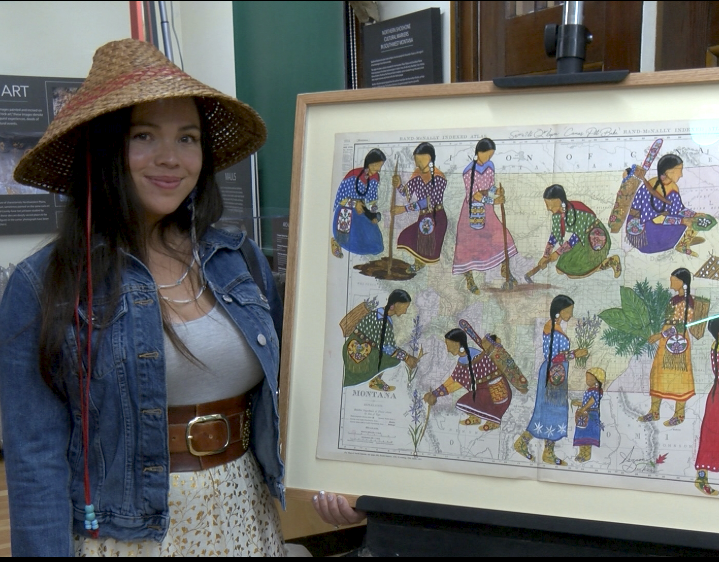 Image 2 of 4
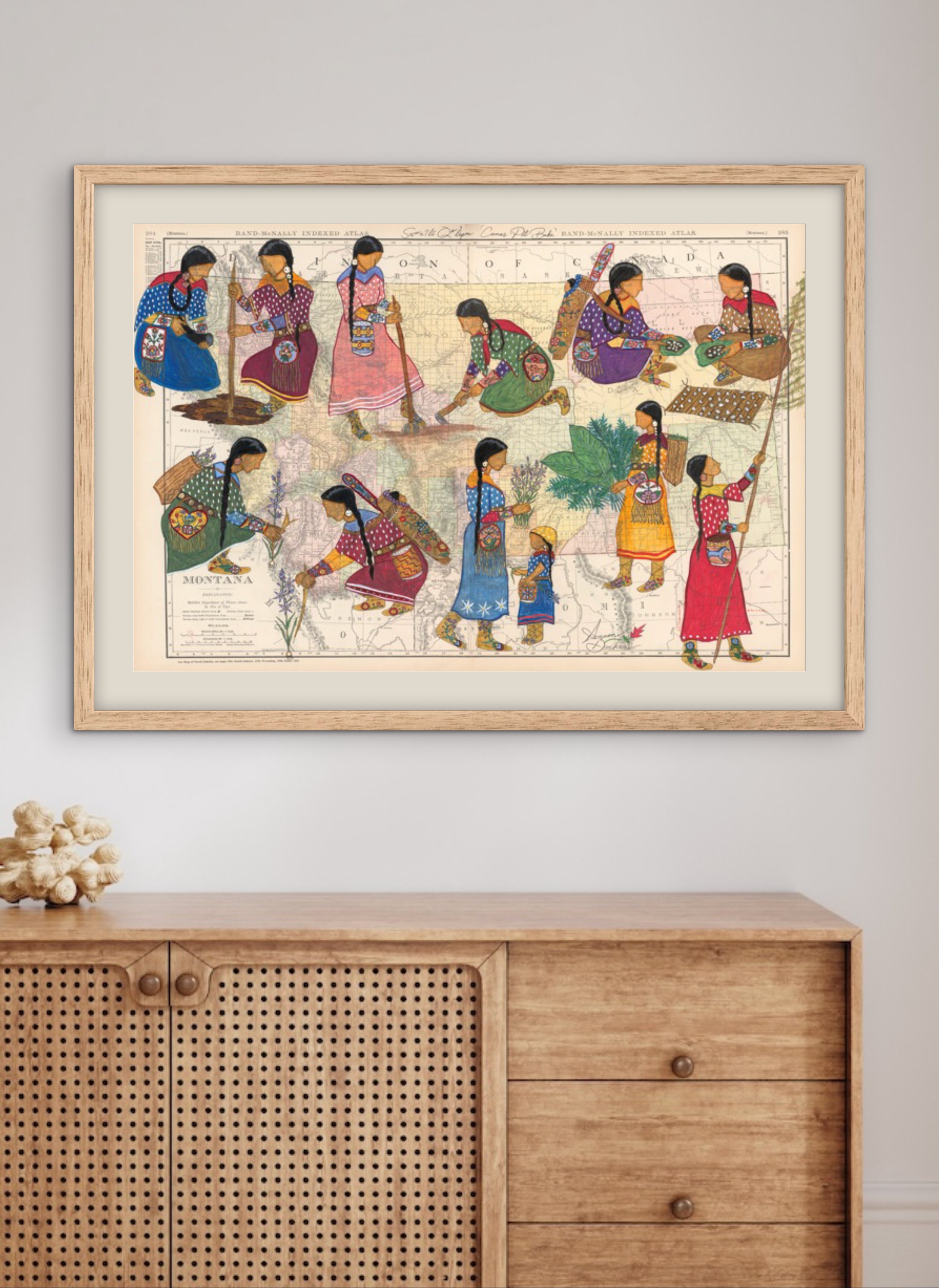 Image 3 of 4
 Image 4 of 4
Title: Sx̣ʷeʔlí Qʷl̓epm ‘Camas Pit Bake
Sx̣ʷeʔlí Qʷl̓epm ‘Camas Pit Bake is a 16” × 24” high-quality poster reproduction of one of my original artworks. Printed with rich detail and care, it ships rolled in a sturdy box made specifically for posters to ensure safe delivery. Orders of 3 posters are rolled together into one box.
Original Artwork Information
Medium: Antique 1910 Montana Map, ink, colored pencils, acrylic
Original Artwork Dimensions:
Year Created: 2026
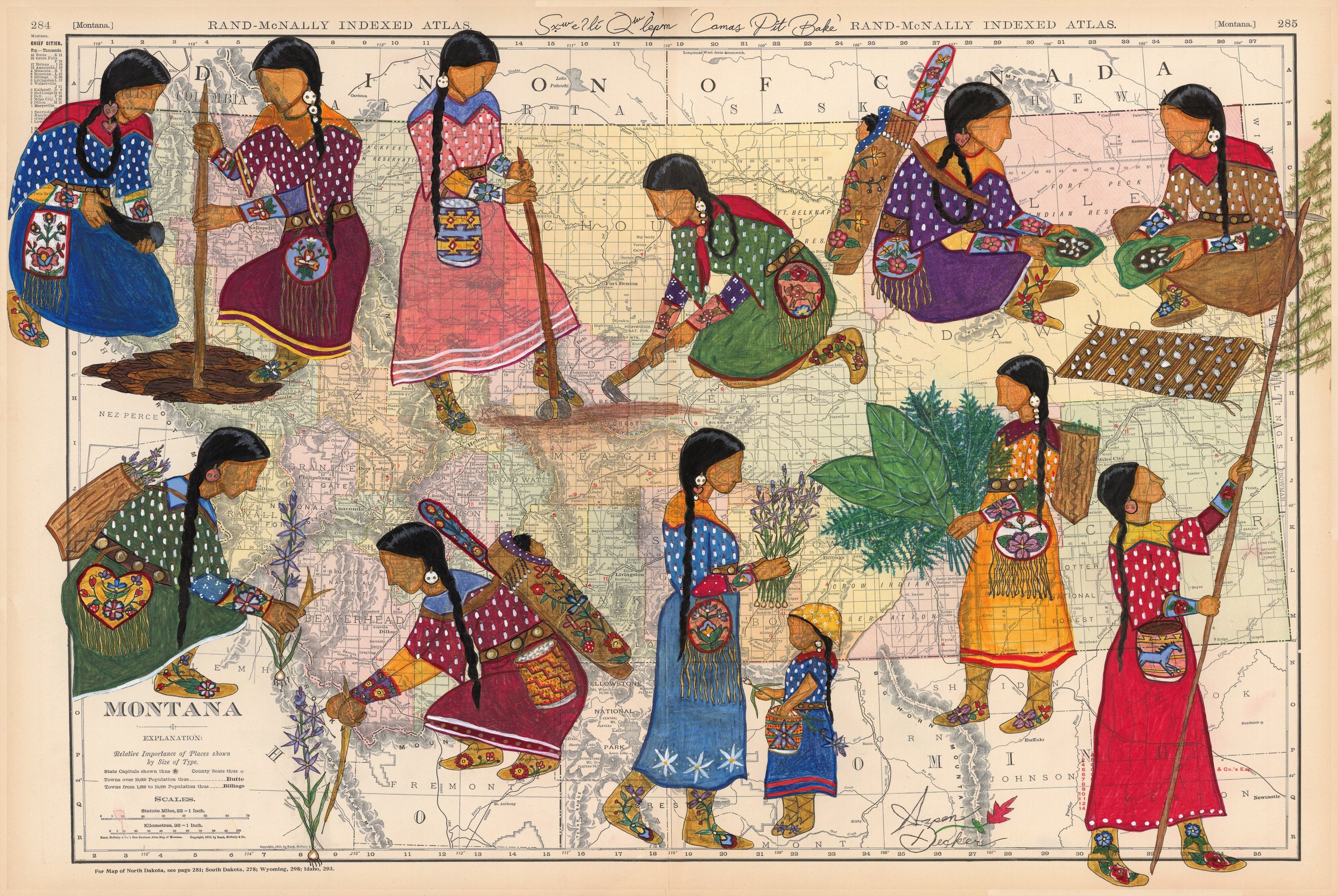
This artwork, Camas Pit Bake, depicts the traditional harvest and preparation of blue camas (Camassia quamash), an important staple food of the Séliš (Salish) people. Camas has been gathered since time immemorial and continues to be harvested today within our Salish communities. Traditionally, women were the primary caretakers of the camas harvest, carrying forward the knowledge and responsibilities associated with this important seasonal practice.
The composition follows the process of gathering and preparing camas for an earth pit bake. Throughout the artwork, women collect camas bulbs and other ingredients used in the baking process, leading to the final scene where everything is placed within the pit. The women are depicted wearing cowrie shell dresses and carrying a variety of traditional containers, including beaded bags, woven root baskets, and cedar bark baskets.
Children and infants are also present throughout the scene. Babies rest in cradleboards while young children accompany the harvesters, reflecting how cultural knowledge is passed from one generation to the next. Through participation in seasonal activities such as camas harvesting, children learn our ways of being, our relationship to the land, and the cultural teachings that accompany each season.
The Salish words written across the top translate to “Camas Pit Bake.” Language and culture are deeply interconnected, carrying our understandings of place, relationships, and worldview. In the lower left corner, women use peceʔs (digging sticks) to harvest camas bulbs and bitterroot.
Traditionally, these digging sticks were carved from wood and sharpened edges on both ends sothat when one side became dull it could be reversed and used again. The handle is made from elk antler and was often passed down through families as an heirloom. Many antler handles were decorated with carved designs that reflected family histories and artistic traditions.
In the upper right corner, camas bulbs rest upon a tule mat. Tule mats served many purposes within Salish life, providing clean surfaces for drying harvested foods and materials. They were also used as flooring and coverings for spring and summer lodges, bedding, canoe cushions, and other belongings.
This artwork highlights the ongoing importance of blue camas within Salish culture and illustrates the deep connections between our people, the land, seasonal lifeways, and traditional knowledge throughout our homelands.
Original collected by the Beaverhead County Museum, Dillon, MT
Featured on NBC MONTANA: https://nbcmontana.com/news/montana-moment/arlee-artist-celebrates-salish-culture-in-painting-of-traditional-camas-harvest