 Image 1 of 2
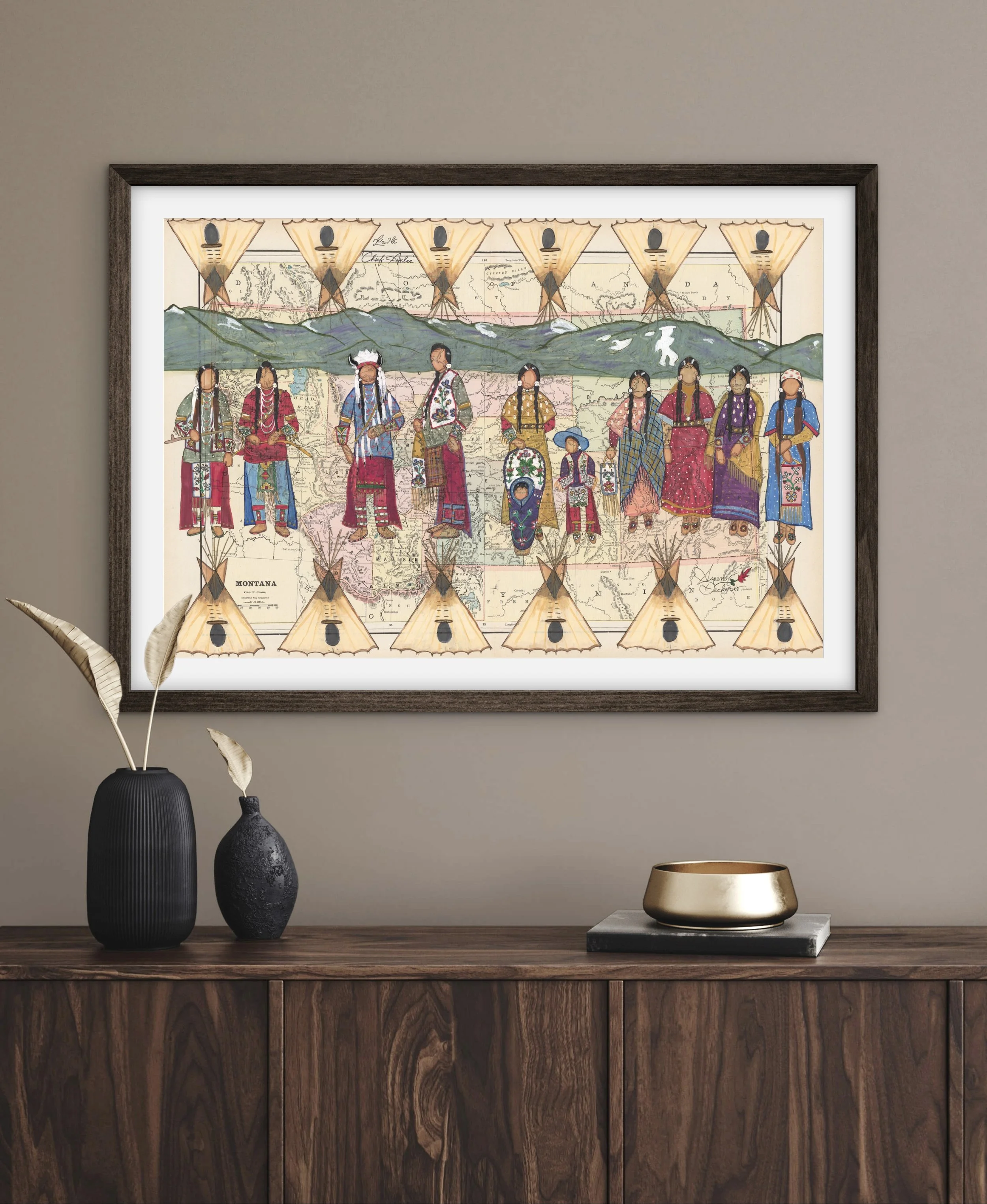 Image 2 of 2
Title: Chief Łaʔlí Arlee Band
Print Information: Archival pigment print, Canson Infinity Arches 88 – an ultra-smooth, archival, 100% cotton paper renowned for its brilliance, longevity, and museum-quality paper.
Original Artwork Information
Medium: Antique 1892 Map of Montana, colored pencil, ink, copic markers, acrylic paint
Original Artwork Dimensions: 14.5” x 22”
Year Created: 2025
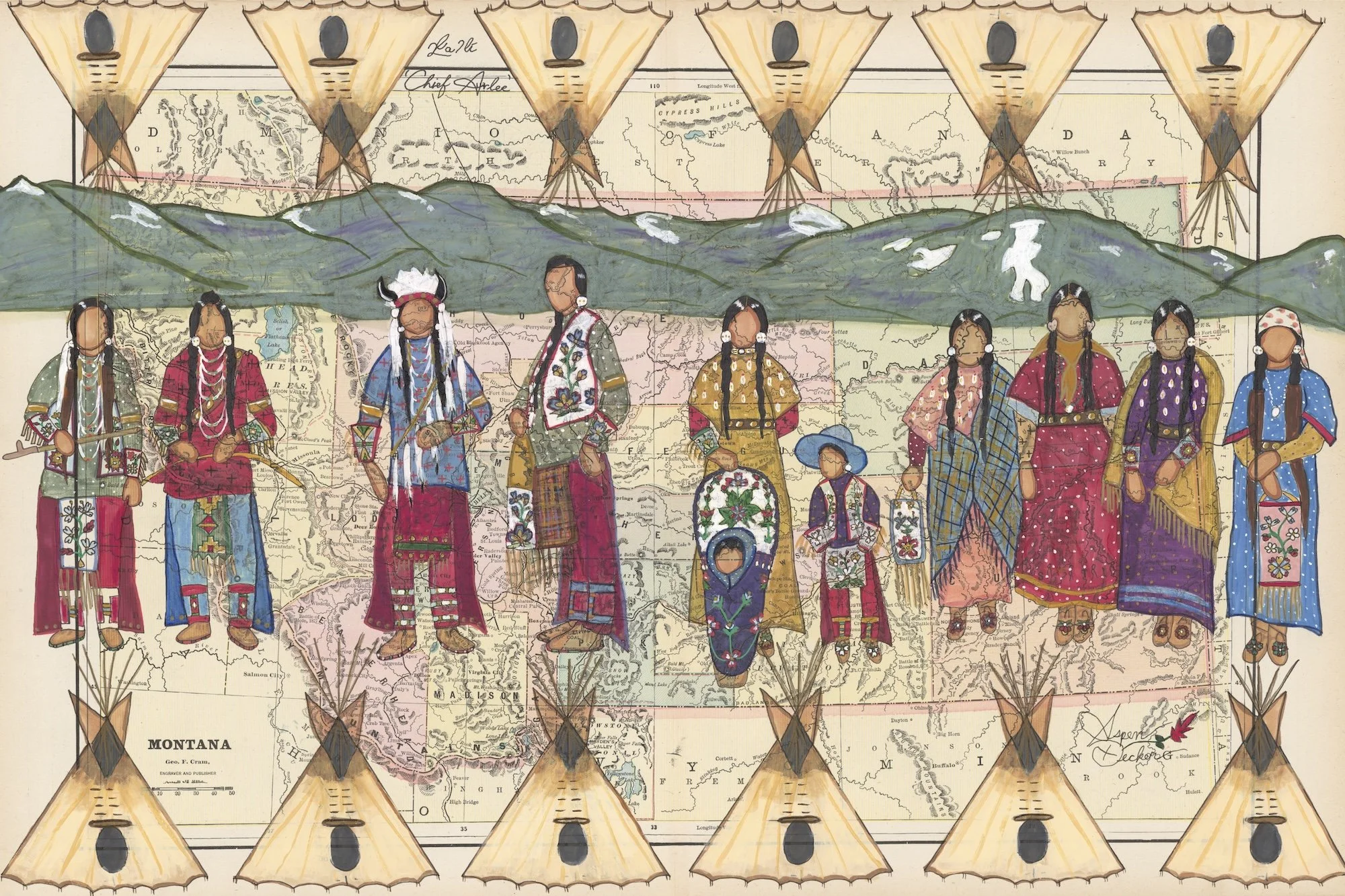
This artwork honors Chief Arlee and the Salish families who, in 1873, chose to leave the Bitterroot Valley and move to the Jocko (Flathead) Reservation, nearly two decades before Chief Charlo and the remaining Bitterroot Salish were forcibly removed in 1891. After the disputed 1872 "Garfield Agreement," which falsely claimed Charlo’s consent, Chief Arlee led his people north. The U.S. government recognized Arlee as Head Chief, stripping Chief Charlo of his title as Head Chief until the after the removal in 1891.
The name "Arlee" derives from Chief Arlee’s name, Łoʔlí, meaning "little man." French settlers adapted it to "Arlee" due to pronunciation challenges. Łoʔlí’s English name was Henry.
In the artwork, Dancing Boy and the east side of the Arlee mountains are depicted, with tipis across the top and bottom referencing a Salish Coyote story. This story tells of a giant, invisible monster whose insides resembled the surrounding land, making it indistinguishable from the outside. The Arlee area was considered the belly of this monster, with its heart located near where Dancing Boy lies.
Features:
Made to Order: Each print is produced to order to ensure the highest print quality. Please allow 7–14 business days for production and delivery.
Standard Frame Sizes: Printed on standard paper sizes that fit widely available ready-made frames.
Shipping Included: Shipping within the United States is included in the purchase price.
Unframed: Ships unframed and carefully rolled in a durable protective tube for safe delivery.
Framing Recommendation: For the best long-term protection, we recommend framing your print with UV-protective glass or acrylic to help reduce fading from sunlight. Most ready-made frames do not include UV-protective glazing, but it can usually be added by your local frame or glass shop at a reasonable cost. For archival display, avoid placing the glazing directly against the print.
Border Options: Choose No Border for an image that extends to the edges of the paper, or Gallery Border for a 1” white border on all sides (reducing the visible image area by 2” in both width and height). See the sizing guide below for image dimensions.
Sizing Guide
Gallery Border
(Adds a 1” white border on all sides)
12”x18” Paper → 10”x16” Image
16”x24” Paper → 14”x 22” Image
20”x30” Paper → 18”x 28” Image
No Border
The image fills the entire selected paper size.
Title: Chief Łaʔlí Arlee Band
Print Information: Archival pigment print, Canson Infinity Arches 88 – an ultra-smooth, archival, 100% cotton paper renowned for its brilliance, longevity, and museum-quality paper.
Original Artwork Information
Medium: Antique 1892 Map of Montana, colored pencil, ink, copic markers, acrylic paint
Original Artwork Dimensions: 14.5” x 22”
Year Created: 2025
This artwork honors Chief Arlee and the Salish families who, in 1873, chose to leave the Bitterroot Valley and move to the Jocko (Flathead) Reservation, nearly two decades before Chief Charlo and the remaining Bitterroot Salish were forcibly removed in 1891. After the disputed 1872 "Garfield Agreement," which falsely claimed Charlo’s consent, Chief Arlee led his people north. The U.S. government recognized Arlee as Head Chief, stripping Chief Charlo of his title as Head Chief until the after the removal in 1891.
The name "Arlee" derives from Chief Arlee’s name, Łoʔlí, meaning "little man." French settlers adapted it to "Arlee" due to pronunciation challenges. Łoʔlí’s English name was Henry.
In the artwork, Dancing Boy and the east side of the Arlee mountains are depicted, with tipis across the top and bottom referencing a Salish Coyote story. This story tells of a giant, invisible monster whose insides resembled the surrounding land, making it indistinguishable from the outside. The Arlee area was considered the belly of this monster, with its heart located near where Dancing Boy lies.
Features:
Made to Order: Each print is produced to order to ensure the highest print quality. Please allow 7–14 business days for production and delivery.
Standard Frame Sizes: Printed on standard paper sizes that fit widely available ready-made frames.
Shipping Included: Shipping within the United States is included in the purchase price.
Unframed: Ships unframed and carefully rolled in a durable protective tube for safe delivery.
Framing Recommendation: For the best long-term protection, we recommend framing your print with UV-protective glass or acrylic to help reduce fading from sunlight. Most ready-made frames do not include UV-protective glazing, but it can usually be added by your local frame or glass shop at a reasonable cost. For archival display, avoid placing the glazing directly against the print.
Border Options: Choose No Border for an image that extends to the edges of the paper, or Gallery Border for a 1” white border on all sides (reducing the visible image area by 2” in both width and height). See the sizing guide below for image dimensions.
Sizing Guide
Gallery Border
(Adds a 1” white border on all sides)
12”x18” Paper → 10”x16” Image
16”x24” Paper → 14”x 22” Image
20”x30” Paper → 18”x 28” Image
No Border
The image fills the entire selected paper size.